Andrew David Pearce
Wildfire fuel characterization from LiDAR and 3D point clouds; physically grounded state estimation and closed-loop measurement-model correction in high-consequence physical systems.
I am a Master of Science in Data Science candidate at UC San Diego and a collaborating researcher in the Battles Lab at UC Berkeley. I build methods for measuring wildfire fuels from mobile laser scans, and most of my attention goes to whether the resulting numbers hold up as real physical quantities.
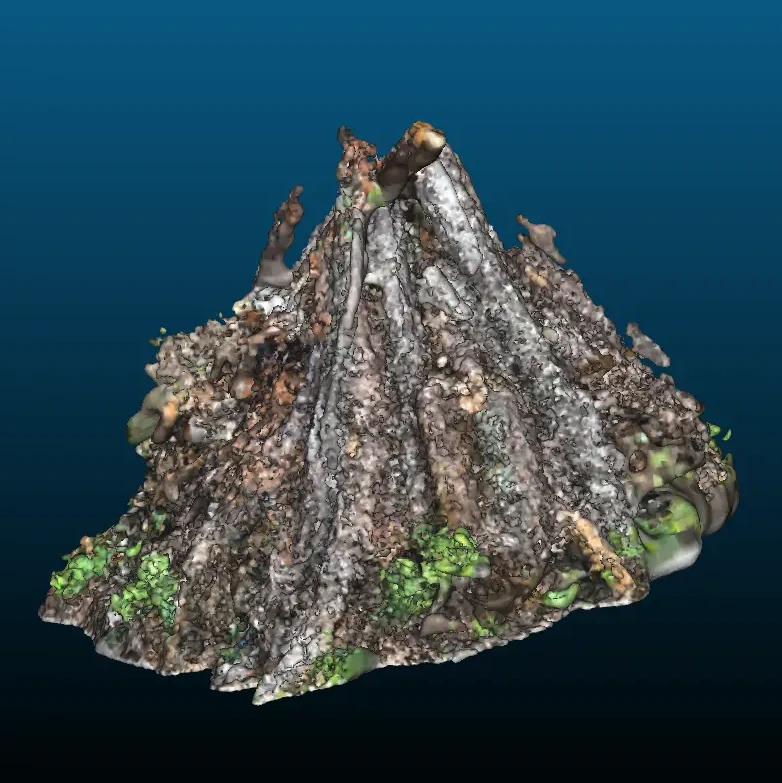
Right now that means burn-pile emissions. With the Battles Lab I developed and field-validated a method that reconstructs slash piles from laser scans and calibrates the result to mass. Against 15 hand-built piles it cut RMSE from 58.0 kg to 8.6 kg and bias from −23.1% to 0.1%, compared with Wright's method.
Honors
-
Winner, 3D Surface Fuels & Vegetation Modeling Prize Challenge (2026)
SERDP/ESTCP, Central Florida Tech Grove with NAWCTSD
-
Data Science Summer Institute Scholar (2026)
Lawrence Livermore National Laboratory, 1 of 39 selected nationally
Selected research
Burn-Pile Volume & Emissions from Mobile LiDAR
UC Berkeley · Battles Lab, Environmental Science, Policy & Management
A field-validated method for estimating slash-pile volume and emissions by reconstructing mobile laser scans in 3D, cutting error roughly eightfold against the standard field method.
LiDAR Fuel-Load Analytics
Silvaye, LLC · NASA JPL incubator
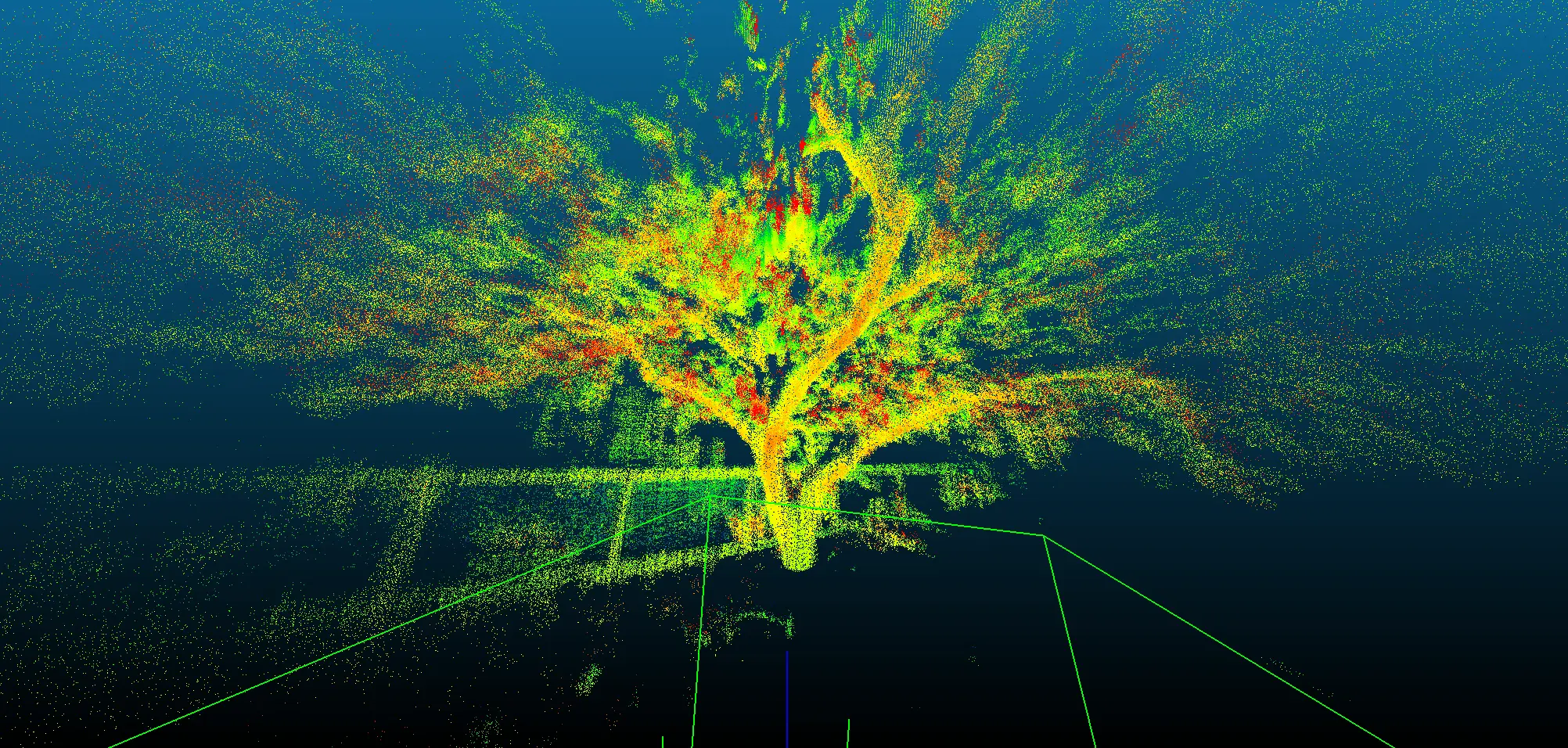
An end-to-end analytics system automating LiDAR ingestion through fuel-load estimation, built to operationalize a NASA-funded wildfire monitoring concept.
Wildfire Spread Modeling & the Shrubwise Data Challenge
UC San Diego / SDSC · Societal Computing and Innovation Lab
LiDAR-derived ground truth and independent verification for a community machine-learning challenge on shrub classification, alongside work on reproducible fire-behavior model implementations.
Selected publications & presentations
-
Olah A, Pearce A*, Saah A*, and Battles J. Mobile LiDAR-based estimation of slash pile volume and emissions (B-PEAs).
In preparation -
Floca M, …, Pearce A, …, Altintas I (2026). Advancing Operational Wildfire Spread Modeling through Reproducible Fire Behavior Model Implementations and Standardized AI-Ready Datasets. IEEE BigData 2026, Workshop on Trustworthy AI Pipelines (WS#60).
Under review -
Karabas S, Ersus B, Pearce A, Lee L, Ramonetti Vega P, Altintas I, Floca M, and Stirm C (2026). Wildfire Commons Shrubwise Data Challenge: Outcomes from a designed machine learning pipeline to label shrubs. AGU Fall Meeting 2026, Wildfire Commons Session (NH056).
Abstract accepted